Most commercial appraisal reports feel dense the first time through. Dozens of pages, technical vocabulary, multiple valuation approaches, and a thicket of assumptions. If the subject is in Lambton County, the local details add another layer, from petrochemical sector rents in Sarnia to highway influenced land values near the 402. This guide walks through how to read a commercial building appraisal report with confidence, using local context and practical examples so you can spot what matters and what can move a value up or down.
Why this report exists and why it matters in Lambton County
An appraisal is an opinion of value prepared for a specific purpose and reader. In our market, the most common intended uses are first mortgage financing, acquisition, litigation support, or financial reporting. A commercial real estate appraisal in Lambton County is usually completed by an AACI designated appraiser who follows the Canadian Uniform Standards of Professional Appraisal Practice, better known as CUSPAP. That designation and that standard are worth more than a footnote. They shape how the work is done, what can be relied upon, and what an underwriter or court will accept.
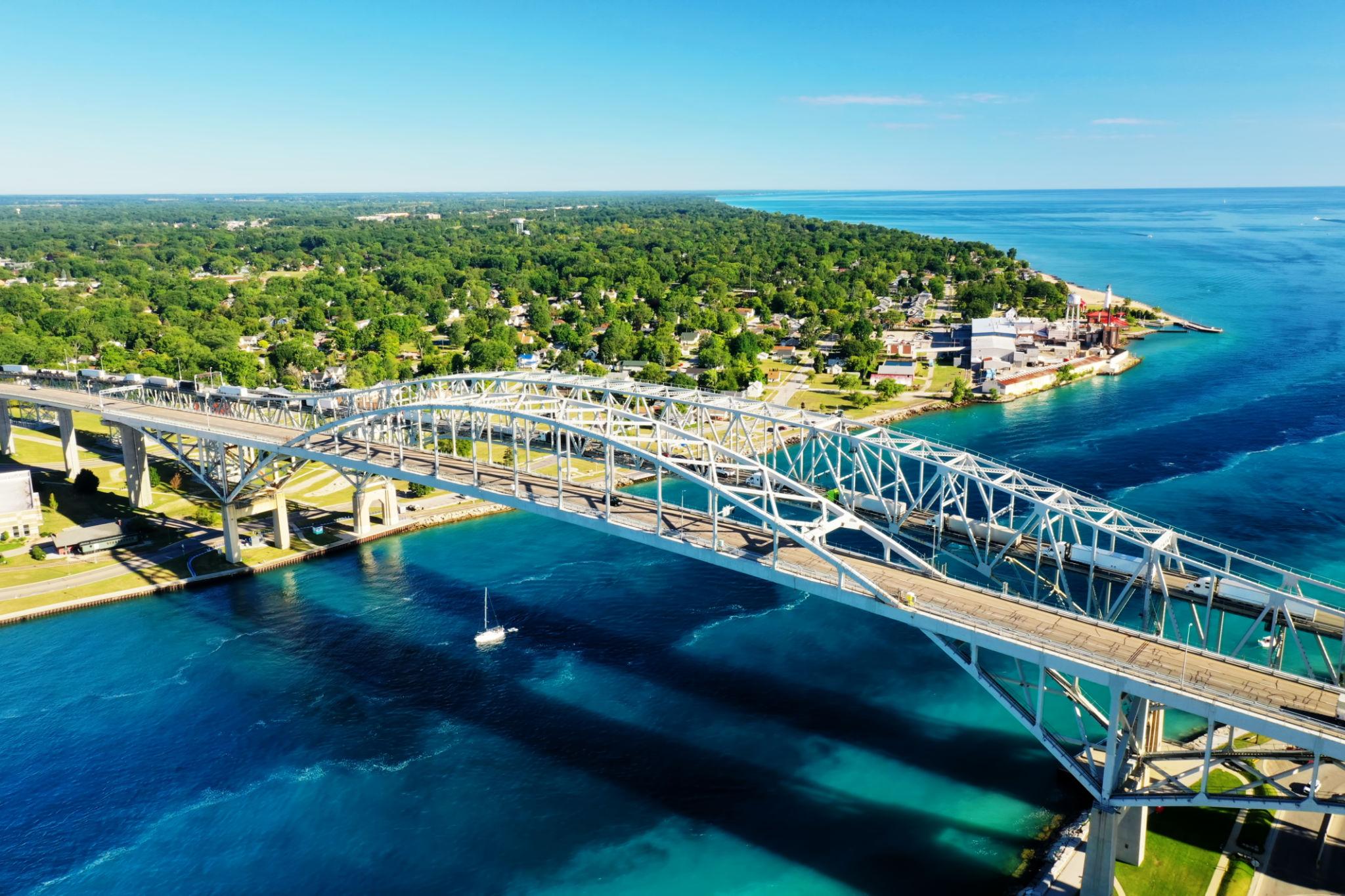
Lambton County is not Toronto. That sounds obvious, but it has consequences in valuation. Lower transaction volume, tenant rosters that often include local or regional covenants rather than national chains, industrial properties with specialized buildouts tied to petrochemical supply chains, and retail pockets that wax and wane with cross border traffic at the Blue Water Bridge. Reading a report in this context means testing assumptions against what actually transacts along Confederation Street, in St. Clair Township’s industrial parks, or on Petrolia’s main corridors, not a generic Ontario average.
Start at the front, not the back
Flip to the letter of transmittal, the certification, and the assumption and limiting conditions. This is where the appraiser tells you who they wrote the report for, why, and under what constraints. For a commercial property appraisal in Lambton County, confirm the following, in plain language:
- Effective date of value versus report date. Value is always as of a date. If you are financing a property, a value as of six months ago can be problematic in a shifting rent or rate environment. Intended use and intended users. If your name or your lender’s name is not here, the report may not be legally relied upon. Interest appraised. Fee simple, leased fee, or leasehold influence the math. If the building has a long term lease at below market rent, a fee simple value and a leased fee value will diverge. Extraordinary assumptions or hypothetical conditions. A common one is reliance on a draft Phase I ESA. If an extraordinary assumption later proves false, the value can swing. Scope of work. Did the appraiser inspect the interior of all units, or only the common areas and a sample of suites. Did they review leases, or only a rent roll.
Those few pages set the guardrails. The rest of the report sits within them.
The property description that actually helps
Good commercial appraisal services in Lambton County do not just list building size and year built. They step into the details that move value locally. Look for site access in winter maintenance contexts, proximity to heavy truck routes, hydro capacity if the use is power intensive, ceiling heights and loading for warehouse or flex space, and any functional obsolescence such as low clear heights in older Sarnia industrial stock. A thirty year old tilt up with 16 foot clearance performs differently than a newer 28 foot clear bay near the 402.
Assess the land too, not just the box. Corner lots with full movement access on London Road or Venetian Boulevard can command a premium. Odd shaped parcels, shallow depths, or restricted curb cuts can cap the pool of users. Parking ratios matter for medical office, and parking layout matters for multi tenant retail. When the report glosses over these, ask questions.
Zoning, official plan, and conformity
Zoning is not a formality. It is the legal boundary around the highest and best use. The report should cite the current zoning category and summarize key provisions: permitted uses, setbacks, coverage, height, parking ratios, and any site specific exceptions. The Official Plan designation provides an upper level context that can support or limit intensification.
In Lambton County, cross check the property’s municipal zoning by law with what is physically built. A quasi industrial use operating in a highway commercial zone or a contractor’s yard on rural lands can be lawful non conforming, minor variance approved, or out of step. Each status has a different risk profile. If the appraisal hinges on redevelopment potential, read whether the assumption is supported by recent approvals nearby or only by wishful thinking. Time and risk to rezone feed directly into the discount rate or developer’s profit.
Environmental and building condition flags
For older industrial or automotive sites in Sarnia and St. Clair Township, a Phase I Environmental Site Assessment is often a gating item. If the appraisal assumes a clean Phase I that has not yet been delivered, know that any subsequent recommendation for a Phase II can alter lender appetite and cap rates. The report should state whether the appraiser reviewed any ESAs or building condition reports. Roof life, HVAC age, and deferred capital items find their way into reserves and net operating income. A new 40,000 square foot roof is not a footnote when it costs 8 to 12 dollars per square foot.
Highest and best use, stated with spine
Every report must address highest and best use as if vacant and as improved. This section is critical when the improvements are mismatched to the land. A small office building on an arterial corner with excess depth may be worth more as retail redevelopment. Conversely, near Chemical Valley, a specialized industrial facility may be at its best use precisely because of its bespoke utility to a narrow group of operators.
Good analysis considers legal permissibility, physical possibility, financial feasibility, and maximum productivity. Watch for the leap from legal to financial. The fact that zoning allows four storeys does not mean the local rent and cost structure will justify it. If the report assumes intensification, it should show land sales that support it and pro formas that reflect Lambton construction costs, soft costs, developer’s profit, and realistic absorption.
Approaches to value and when each matters
Three classical approaches appear in most commercial building appraisal reports in Lambton County. They are not checkboxes. Each has strengths in specific property types and market conditions.
Income approach. This is the backbone for leased properties and owner occupied buildings that could be https://realex.ca/commercial-property-appraisal-services/ leased. The logic is straightforward. Stabilize the income, subtract realistic expenses and reserves, then capitalize the net operating income or model it explicitly with a discounted cash flow if the lease profile is irregular.
Direct comparison approach. This uses recent sales of similar properties, adjusted to the subject. In Lambton County, the challenge is thin data. One or two relevant sales within 12 months often do more work than a long list of distant or incomparable deals. Adjustments must be explained, not guessed.
Cost approach. Best used when properties are new or special purpose, or land value is a big piece of the whole. You estimate the land as vacant, estimate the replacement cost new of the building, then subtract depreciation. External obsolescence is easy to miss in smaller markets. If a segment is oversupplied, the cost approach without a rigorous external obsolescence adjustment will overstate value.
Reading the income approach without a calculator cramp
Focus on five items: rent, vacancy, expenses, reserves, and the capitalization rate or discount rate. The nuances live in the definitions.
Contract rent versus market rent. If the subject has leases, the appraiser should discuss where those rents sit relative to current market. On a Sarnia strip retail unit at 1,500 square feet, a 14 dollar net rent with 4 dollar additional rent might be below a current 16 to 18 dollar range for better located space near Lambton Mall. If contract rent is below market with near term expiry, a stabilized rent above current contract is reasonable. If the leases run eight more years with fixed 1 percent bumps, you cannot assume market in year one.
Vacancy and credit loss. Use market stabilized rates, not a snapshot of one empty unit. For small bay industrial near Confederation Street, a 3 to 6 percent stabilized vacancy might be defensible in a tight year. For downtown second floor office without an elevator, 10 percent may be more prudent. The report should reconcile actual history and peer properties.
Operating expenses. In a true net lease, the landlord passes taxes, insurance, and common area maintenance to tenants. In practice, there are leakages. Management, non recoverable repairs, leasing commissions, and bad debt can still hit the owner. If the report shows an implausible expense ratio, test it against a simple rule of thumb. For a multi tenant building, even with net leases, total leakage and owner expenses often land between 3 and 8 percent of effective gross income.
Reserves for replacement. Many owner pro formas omit reserves. Appraisals should not. A reserve of 0.20 to 0.40 dollars per square foot per year for basic retail and industrial is common in Ontario, rising for complex office systems. The right number depends on the actual capital plan, roof age, and mechanicals described earlier.
Capitalization rate and discount rate. This is where the local market speaks loudest. A single tenant building with a small regional covenant on Murphy Road will not trade at the same cap rate as a fully leased, multi tenant building with national covenants and long terms near London Road. In recent years, arm’s length sales in Sarnia for stabilized multi tenant retail have shown cap rates in broad ranges, often 6.25 to 7.75 percent depending on tenant mix and term, with small industrial flex sometimes similar or slightly wider. The report should show actual local or regional evidence, not just national surveys, and explain any adjustments for tenant quality, lease term, and asset condition.
If there are substantial near term lease expiries, a discounted cash flow may be appropriate. When reading a DCF, focus on renewal probabilities, downtime assumptions, leasing commissions, tenant improvement allowances, and terminal cap rate. Terminal rates should be higher than going in caps in most cases, reflecting risk and aging.
Making sense of the direct comparison approach
Comparable sales are only useful when they are comparable. For Lambton County, proximity matters. A sale in Chatham or London can be informative, but it needs adjustment. The appraiser should disclose sale dates, prices, price per square foot, occupancy at sale, cap rates if income producing, and any atypical conditions like vendor take back financing.
Adjustments come in two types, quantitative and qualitative. Quantitative adjustments for time, size, condition, or location are powerful when supported by data. For example, adjusting for a 10 month gap might be modest when the interest rate environment is stable, but more material if rates moved 100 basis points. Qualitative notations like superior or inferior help, but they should not be a crutch. In thin data markets, the direct approach often serves as a boundary check for the income approach more than the driver.
The cost approach without rose coloured glasses
Replacement cost new is not the construction contract sum. It includes indirects like soft costs, consultants, permits, and sometimes an entrepreneurial incentive. For a straightforward 20,000 square foot warehouse in Lambton County, replacement may fall in ranges like 130 to 180 dollars per square foot depending on specs, before land. Depreciation comes in three forms.
Physical depreciation. Roof age, wear and tear, and maintenance history feed into this.
Functional obsolescence. Shallow bays, low clear heights, limited power, or poor loading can depress effective value even if the building is sound.
External obsolescence. This is market based. If there is oversupply or weak demand for a type, depreciation can be heavy. In some smaller office segments, this can be the largest factor.
Land value must be supported by land sales, not backed out from improved sales without care. If no recent land sales exist in the immediate area, the report should use regional proxies with reasoned adjustments for servicing, exposure, and development timing.
Reconciliation is not an average
At the end, the appraiser reconciles the approaches into a single value. This is judgment, not arithmetic. In a stabilized, leased retail plaza near Lambton Mall, the income approach likely carries most weight. In a specialized owner occupied industrial building with limited leasing comparables, the cost approach may get more emphasis, tempered by external obsolescence. The direct comparison, if weakly supported, should be acknowledged as such. A good reconciliation section tells you why, not just what.
What lenders and courts actually read
Bank reviewers and litigation counsel do not read every page. They scan for scope, assumptions, value definition, effective date, and the chain of logic in the income approach. They look for internal consistency. If the report says the market is tightening, but vacancy and downtime assumptions are conservative to the point of pessimism, they will ask why. If the cap rate is outside the range of cited sales, they want the rationale. When a commercial appraiser in Lambton County earns repeat business, it is often because reviewers find the reasoning tight and the local evidence credible.
A quick, practical checklist for owners and buyers
- Confirm you are an intended user, and the effective date suits your decision. Circle the stated highest and best use and ensure the valuation aligns with it. In the income approach, test market rent, vacancy, and reserves against what you know from leases and maintenance logs. Read the cap rate evidence, not just the final rate, and note which sales truly resemble your property. Scan extraordinary assumptions and hypothetical conditions and decide whether you can live with the risk they introduce.
Common red flags that deserve a phone call
- The report uses distant or dissimilar sales without meaningful adjustments when local evidence exists. Expense leakage is set to near zero in a multi tenant context, yet the landlord historically covers repairs and management. Cap rates or discount rates are anchored to national surveys without local anchoring or tenant covenant analysis. Highest and best use assumes redevelopment value today, while zoning and absorption suggest a longer and riskier path. Extraordinary assumptions about environmental or structural matters are treated as trivial in the value discussion.
Reading lease analysis with a landlord’s eye
For multi tenant properties, the lease review is the engine. You want to see:
Tenant roster and covenants. National credit, regional chains, and local independents each carry different re leasing risk. A plaza anchored by a grocery or pharmacy reads differently than one lined with small independents.
Term and options. Reminder that options are the tenant’s right, not the landlord’s. If option rents are tied to CPI with caps, model that, do not assume full market.
Rent steps and inducements. Free rent periods and tenant improvement allowances should be amortized in a DCF. In a direct cap, they might be reflected via a higher cap rate or an explicit adjustment to stabilize.
Recoveries. Look for caps on controllable expenses, exclusions, and administration fee structures. A 15 percent admin fee sounds strong until you read that certain costs are excluded from the base. Net leases in practice often under recover a few categories.
Percentage rent or unusual clauses. Restaurants along Exmouth or London Road may have percentage overages. They are lumpy and should not be capitalized as if guaranteed.
Taxes and assessments
In Ontario, MPAC assessments and municipal tax rates are public. The report should confirm current taxes and, where relevant, assess risk of reassessment after renovations or additions. For properties with material non recoverables or tax appeal trajectories, the appraiser should state assumptions clearly. A sudden 10 percent tax jump can erode net income by thousands annually, which capitalized at 7 percent equates to a value shift in the tens of thousands.
Making sense of capitalization rate selection
Cap rate selection in Lambton County is sensitive to four variables: tenant quality, lease duration, asset quality, and liquidity. A single tenant industrial condo with a small fabricator under a three year lease near Plank Road will not match a multi tenant flex building with five year terms and a diverse roster. Sales evidence should be weighted accordingly. If the report cites three retail sales at 6.5 to 7.0 percent caps with national tenants on 8 to 10 year terms, and your subject has mostly local tenants on three year leases, a subject cap near 7.5 to 8.25 percent may be more realistic unless offset by exceptional location or condition.
When interest rates move, cap rates do not track one for one. Local buyer pools, financing spreads, and perceived risk push and pull. A commercial property appraisal in Lambton County that simply overlays a 100 basis point cap rate increase because the policy rate moved 100 basis points is oversimplifying. The commentary should bridge the gap with actual closing data and active listings.
Assumptions and limiting conditions are not boilerplate
Treat this section as a risk inventory. If reliance on client supplied rent rolls is disclosed, make sure you have validated them against leases. If the appraiser relied on plans and did not measure, check building area accuracy, especially for older conversions where rentable areas and gross floor areas drift over time. If the report is draft and subject to receipt of third party reports, diarize follow up dates. Your loan covenant may require updated values once those conditions clear.
How to work productively with a commercial appraiser in Lambton County
Share complete leases, amendments, estoppels, and a recent rent roll. Provide a capital expenditure history and any upcoming projects with budgets. If environmental or building reports exist, supply them early. Clarify intended use and timeline. A commercial appraiser in Lambton County who understands whether a report is for a share sale, asset sale, or refinancing can tailor the analysis and assumptions. If you believe the property commands a premium for reasons not obvious on paper, such as a power upgrade or a unique yard access pattern, invite the appraiser to see it. Context that lives in the yard or the mechanical room does not always live in municipal records.
A note for special use and owner occupied properties
Hotels, seniors’ housing, gas stations, and automotive service centers require specialized analysis. For these, income often includes business components beyond real estate. CUSPAP is clear about separating real estate value from enterprise value when the assignment calls for it. If your facility is owner occupied, the appraiser will often impute market rent. Expect a careful explanation of how that rent was derived, with reference to truly comparable leases. In Sarnia and surrounding townships, owner user buildings sometimes transact on price per square foot benchmarks without published cap rates. The report should show how the imputed rent aligns with observed sale prices when translated back to cap rates.
Pulling it together
By the time you finish a commercial building appraisal in Lambton County, you should feel you know the property better than before. The strongest reports make their judgment visible. They discuss the industrial character around Chemical Valley when valuing a warehouse on Plank Road. They quantify how a recent roof replacement and LED retrofit reduce near term reserves. They show their cap rate choices, not just declare them. They acknowledge when the direct comparison is thin and lean more on income or cost.
If you are commissioning or relying on an appraisal, choose commercial appraisal services in Lambton County that are steeped in the local market and transparent in their work. The price of a misread assumption is not theoretical. A 50 cent per square foot error in stabilized rent on a 30,000 square foot building is 15,000 dollars a year, which at a 7.25 percent cap translates to roughly 207,000 dollars in value. Care in reading and commissioning these reports pays for itself many times over.
Whether you are a buyer, a lender, or an owner looking to refinance, read the certification, set the scope, then follow the money through rent, vacancy, expenses, and cap rates. Press on the assumptions that carry the most weight. When something does not track with what you know of Sarnia, Petrolia, or the highway corridors, ask for the evidence. A capable commercial real estate appraisal in Lambton County will have it ready, and will welcome the conversation.